
Figure Skates for Beginners: How to Choose a First Pair in Canada

A beginner figure skate needs firm ankle support, a snug heel and a blade sharpened by someone who knows figure blades. Soft, padded recreational skates suit public skating and early CanSkate sessions. Once lessons become weekly and spins or small jumps appear, a stiffer entry-level figure boot with a more defined toe pick is worth the step up. Fit it to the foot, not the shoe size.
Below: the difference between recreational and entry-level figure skates, how stiff a first boot should be, what the blade does, where CanSkate fits in, and how to size, sharpen and protect a first pair.
Recreational skates vs entry-level figure skates
Most "figure skates" sold for beginners fall into three groups. The names on the box vary, so judge by the boot and blade rather than the label.
| Type | Boot | Blade | Best suited to |
|---|---|---|---|
| Recreational (soft boot) | Padded, often with a fleece or plush lining; softer around the ankle | Stainless steel with a small toe pick | Public skating, outdoor rinks, occasional family skates |
| Entry-level figure | Leather or synthetic-leather upper, firmer ankle, padded collar and lace hooks | Larger, sharper toe pick and a more pronounced rocker | Regular lessons, first spins and small jumps |
| Adjustable children's figure skates | Hard shell with an extendable toe section | Basic blade with a toe pick | Young children growing quickly who skate casually |
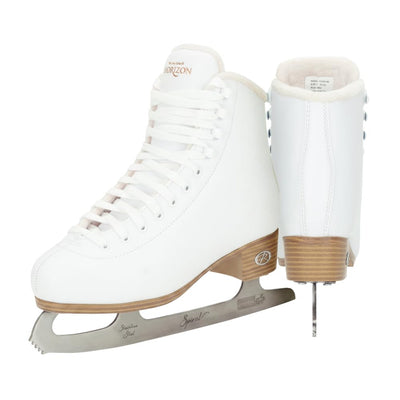
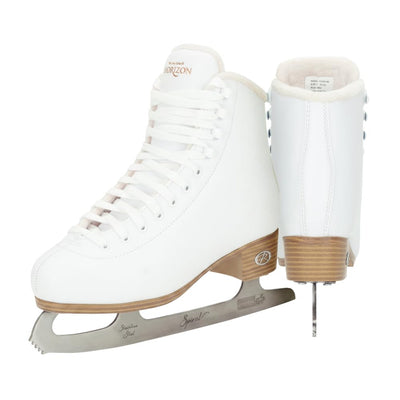
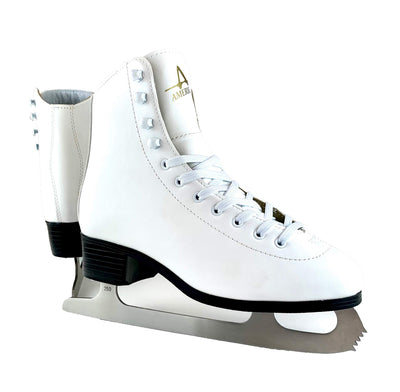
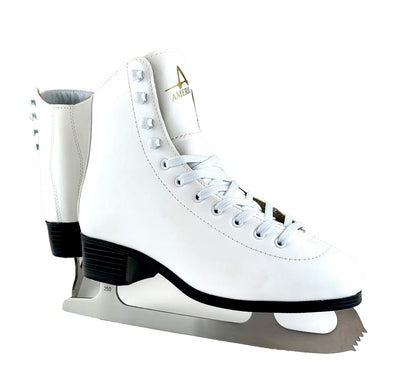
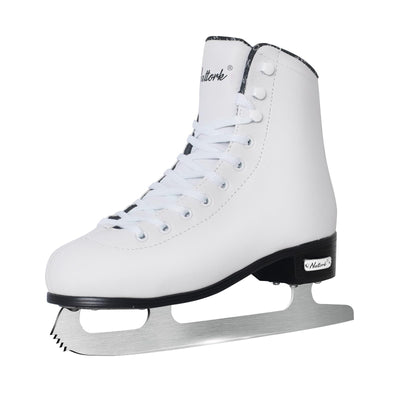
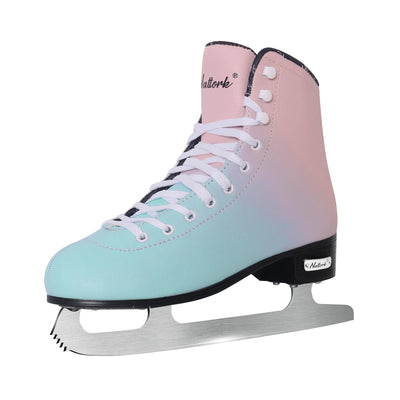
In our figure skates you'll see both ends of that range: soft recreational models such as the Riedell Horizon, Riedell Ember, Lake Placid Everest and Rollerblade Igniter, medium-support boots like the Jackson Ultima Finesse 180, and beginner figure boots such as the Jackson Ultima Classic 500 and Mystique. For young children, the adjustable and fixed-size pairs in kids' ice skates are the usual starting point, and the wider ice skates range lets you compare figure models with hockey-style recreational pairs.
Boot stiffness: how much support a beginner needs
Stiffness is the decision that matters most, and both extremes cause problems. A boot that's too soft lets the ankles fold inward, so the skater fights to stay upright on the blade. A boot that's too stiff won't let a light skater bend their knees, which makes basic gliding harder and often hurts until it breaks in. Parachute's ice skating safety advice asks for skates with firm ankle support that fit snugly.
Three things decide the right stiffness:
- Hours on the ice. A few public skates each winter need comfort; weekly lessons need more support.
- Body weight. Adults and heavier teens compress a soft boot quickly and usually need a firmer one than a child at the same level.
- Skills being learned. Spins and jumps put far more load on the ankle than forward stroking.
A simple test: lace the boot firmly and bend your knees as if sitting on a high stool. You should be able to flex forward with some effort, and your ankles shouldn't bend sideways when you stand still.
The blade: toe pick, rocker and edges
Figure blades differ from hockey blades in three ways that a beginner notices on the first day.
- Toe pick. The teeth at the front are used for jumps and some spins. Beginners catch them when they lean too far forward, so lessons teach skaters to keep their weight over the middle of the blade.
- Rocker. The blade is curved along its length. Only a short section, just behind the ball of the foot, contacts the ice at any moment, which is what makes turns and spins possible.
- Hollow and edges. A shallow groove is ground along the bottom, leaving an inside and outside edge. Most figure skating moves are done on one edge, not the flat.
Recreational blades usually have a smaller, rounder toe pick and a gentler rocker, which feels steadier for a first-timer. Blades are either stainless steel or chrome-plated carbon steel; both need drying after every skate to prevent rust.
Where beginners start in Canada: CanSkate and beyond
CanSkate is Skate Canada's learn-to-skate program, delivered through local clubs for children and, as Adult CanSkate, for grown-ups. It's organized in stages focused on balance, control and agility rather than figure skating elements. Skate Canada's helmet use policy requires all CanSkate and Adult CanSkate participants up to and including Stage 5 to wear a CSA-approved hockey helmet, and clubs must enforce it. Many clubs accept either figure or hockey skates in CanSkate, so check your club's equipment list before you buy.
| Skating level | Typical ice time | Skate to look for |
|---|---|---|
| Occasional public or outdoor skating | A handful of sessions a winter | Recreational soft boot with a warm lining |
| CanSkate or Adult CanSkate | One or two lessons a week | Recreational or medium-support figure skate, plus a CSA-approved hockey helmet up to Stage 5 |
| Early figure skating lessons | Several sessions a week | Entry-level figure boot with firmer ankle support and a defined toe pick; ask the coach before buying |
Skaters who move into Skate Canada's figure skating streams after CanSkate will eventually need a boot and blade matched to their jumps, and a coach's opinion is worth more than any chart at that stage.
Sizing a first pair of figure skates
Figure skate sizing is brand-specific, so start with a measurement instead of a shoe size.
- Measure the longest foot in centimetres, standing, late in the day.
- Check the brand's own chart for that model; the relationship to shoe size differs between makers.
- Note the scale. Women's and men's figure sizes don't match for the same foot, and listings often show both, such as a women's 8 next to a men's 6.5.
- Look for widths. Some models come in letter widths (you'll see B or C in listings); the brand chart explains what each letter means.
- Try them on with the thin socks or tights you'll skate in.
A good fit has the toes just touching the front when standing, the heel locked into the back when the knees bend, and no pinching over the ankle bones. The fit tests in our hockey skate sizing guide (finger behind the heel, walk test, checking for red spots) work the same way for figure boots.
Lace firmly over the foot, snug through the ankle hooks, and slightly looser at the top two hooks so the knee can bend forward. Hockey Canada's equipment guide warns never to wrap laces around the ankle, as it can restrict circulation and irritate the Achilles tendon; that applies to figure skates too.
Sharpening figure blades
Figure blades should go to a sharpener who regularly does figure skates. The toe pick must not be ground down, and the rocker profile needs to stay intact; a sharpener set up only for hockey blades can change how the skate turns. Many recreational skates arrive pre-sharpened, but ask the shop to check the edges before the first lesson.
There's no fixed schedule. Sharpen when the skate slides sideways during a push or a stop, or when edges that used to grip now feel slippery. Skaters on the ice several times a week will need it more often than a weekend skater. Handheld sharpeners and stones, like those in hockey skate accessories, are useful for removing small burrs between sharpenings, but they don't replace a proper machine sharpening.
Guards and soakers: two different jobs
| Item | When to use it | Why |
|---|---|---|
| Hard guards | Walking from the bench to the ice and back | Protect the edges from rubber mats, concrete and grit |
| Soakers (fabric covers) | In the bag and during storage | Absorb condensation so the blade doesn't rust |
| Blade cloth | Straight after skating | Wipes off water before soakers go on |
Never store skates in hard guards: water trapped against the steel causes rust. At home, take the skates out of the bag, open the boots wide and let them air-dry away from direct heat, which Hockey Canada says can break down fibres and padding. Guard, soaker and towel sets are among the skate accessories linked above; match the guard size to the length of your blade.
The first few sessions
Expect a short break-in. Wearing new skates around the house with guards on, in short stretches, softens the boot before the first lesson; Hockey Canada's parent guide suggests the same for new hockey skates. Dress in light layers so the skater can move; our winter layering guide covers what works at a cold rink. For the neck, Health Canada's winter recreation safety page recommends a neck warmer rather than a scarf. If the first skates are outdoors on a pond or lake, check our ice thickness safety guide before stepping on.
Frequently asked questions
Can a beginner learn to skate in figure skates?
Yes. Many skaters learn in figure skates, and recreational figure models are built with softer, padded boots for exactly that stage. The toe pick takes a little getting used to, because leaning too far forward catches it, but lessons teach skaters to keep their weight over the middle of the blade. Clubs running CanSkate often accept figure or hockey skates, so check your club's equipment list.
Do you need a helmet for CanSkate?
Yes. Skate Canada's helmet use policy requires all CanSkate and Adult CanSkate participants up to and including Stage 5 to wear a CSA-approved hockey helmet, and member clubs must enforce it. Skaters with poor balance in other Skate Canada programs must wear one as well. Bike helmets aren't a substitute, because the requirement is specifically a CSA-approved hockey helmet.
How stiff should a first pair of figure skates be?
Firm enough that your ankles don't fold inward when you stand, but soft enough that you can bend your knees forward with some effort once laced. Occasional skaters do well in soft recreational boots. Skaters taking weekly lessons, heavier adults and anyone starting spins or small jumps usually need a firmer entry-level figure boot. A coach can confirm the level of support.
Do new figure skates need sharpening?
Often, yes, or at least checking. Many recreational skates arrive pre-sharpened, but edges vary, and a proper sharpening by someone who works on figure blades makes the first sessions far easier. They should keep the toe pick and rocker profile intact. After that, sharpen when the blade slides sideways during a push or stop, or when edges that used to grip feel slippery.
What is the difference between skate guards and soakers?
Hard guards are for walking on floors and mats between the bench and the ice; they protect the edges from grit and concrete. Soakers are fabric covers for the bag and for storage; they absorb condensation so blades don't rust. Never store skates in hard guards, because trapped water rusts the steel. Wipe the blades dry first, then put the soakers on.